

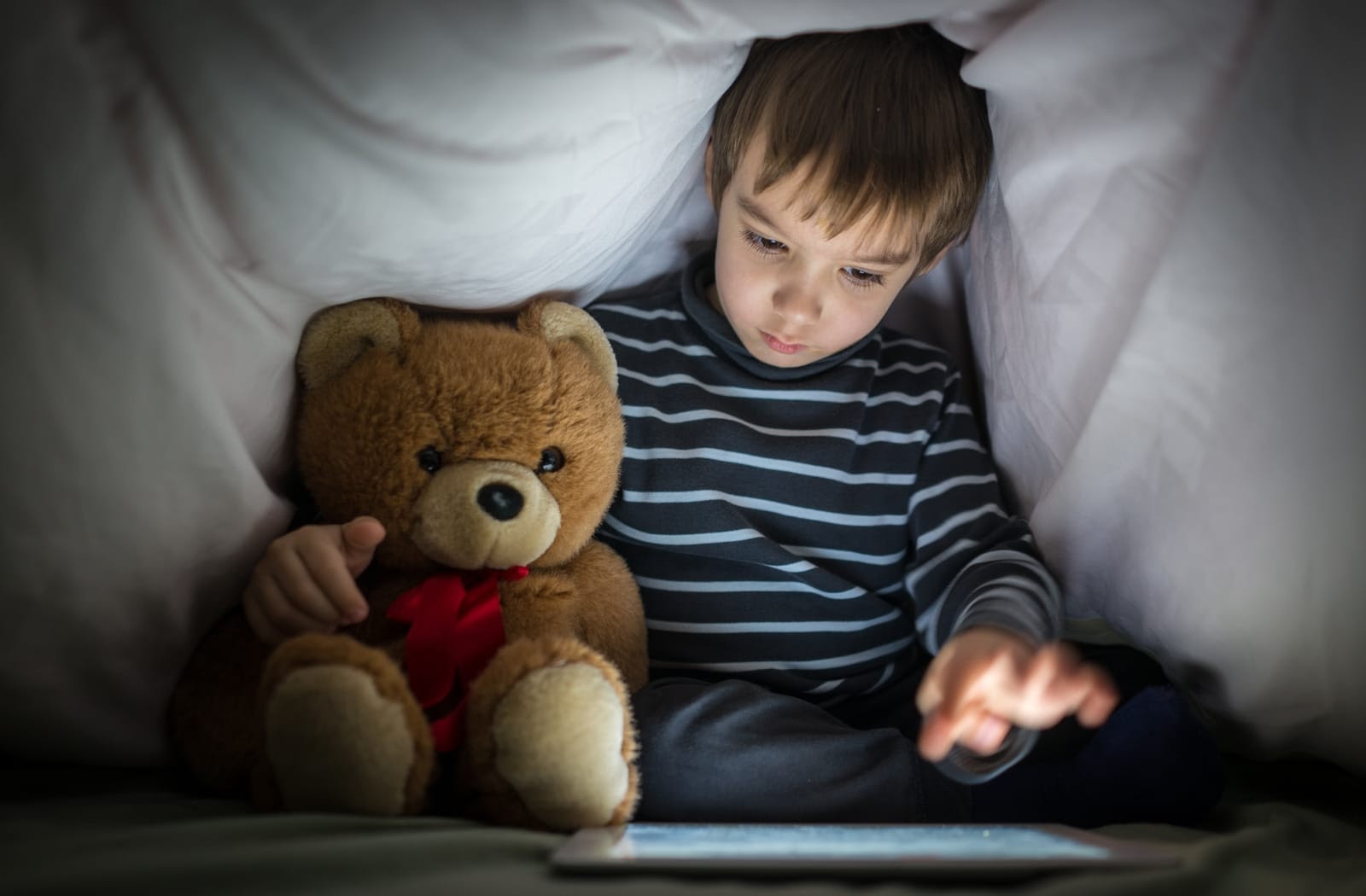
Between online learning and ever-present digital devices, children are spending exceptionally long hours in front of screens. Adults know that our own time spent in front of screens is exposing us to blue light that can seriously disrupt our sleep. This blue light exposure at night may be even worse for kids.
Children are more light-sensitive than adults and need more sleep for healthy long-term development and optimal performance at school. The good news is there are several steps you can take to limit your child’s nighttime exposure to blue light, help them sleep better, and take care of their visual health.
What is Blue Light?
The visible light spectrum is made up of different wavelengths of light. At one end of this rainbow, there’s lower-energy red light, and at the other, high-energy violet. Blue light falls toward the high-energy end of the spectrum.
Blue light is present in the energy emitted by the sun. When we’re exposed to sunshine (safely, while wearing sunglasses, of course), the light helps us feel alert and energetic. Soaking up that sunshine during the day is an important part of keeping our circadian rhythm—that’s our internal clock—aligned with nature so we can get to sleep when it’s dark out.
Where Else Does Blue Light Come From?
But there’s also blue light from artificial sources, and this human-made blue light can have negative effects on our sleep. Nearly all of the artificial light sources you interact with daily contain some blue light, including:
- LED, fluorescent, and incandescent lighting
- Smartphones, tablets, eReaders
- TVs
- Many nightlights
Keep in mind that light doesn’t have to look blue to contain blue wavelengths.
How Does Blue Light Affect my Child’s Sleep?
Just like blue light during the day can help keep children and adults alert, blue light at night can be stimulating. In fact, exposure to any kind of light at night can be stimulating, but with its higher energy, blue light has more impact than green or red light, for example.
This is believed to be because exposure to blue light greatly suppresses the secretion of the hormone melatonin. Melatonin helps us sleep naturally and it typically rises in the evening as we approach bedtime.
With less melatonin being produced at bedtime, kids may be less sleepy, unable to fall asleep, or not sleep as well.
The Importance of Sleep for Children
Grownups can get away with losing sleep once in a while, but for children, frequent bad sleep can add up to a poor performance in school, developmental concerns, and behavioural issues. The World Health Organization’s latest guidelines emphasize the supreme importance of enough sleep, plus more physical activity, and less time spent on screens for healthy lifelong development.
Any parent whose little one has missed nap time can tell you that a grumpy child is tough on the whole family. But research has also found that missed sleep in kids can cause inattentiveness, impulsivity, and trouble self-regulating.

How to Reduce Children’s Blue Light Exposure
First, it’s important to know that blue light exposure alone is not the only culprit for lost sleep. Screen use of any sort near bedtime, even if a warm-toned night mode is used, may also overstimulate your child.
Here are some steps you can take to reduce the amount of blue light your child’s eyes are exposed to in the evening:
- Follow WHO guidelines for screen use: The World Health Organization advises no more than one hour of screen time for three and four-year-olds—but much less is better
- Make a “no screens before bedtime” rule: Teens and adolescents should step away from screens two to three hours before bedtime
- Switch to red nightlights: Red light doesn’t have the same melatonin-suppressing qualities as blue light
- Read books instead of eBooks at night: Ensure the room is lit brightly enough to avoid eye strain while reading and, no matter how good the book is, no reading under the covers with a flashlight after lights out
- Switch to low-blue-light LED bulbs: Or invest in light bulbs with different light colour options to light your home with warmer colour lights in the evening
- Get outside and play: Sunlight exposure during the day can help with energy during the day as well as sleeping well at night
Digital Eye Strain vs. Blue Light for Children
Blue light isn’t the only factor to consider when it comes to your children using screens. Just like the dry eyes, achy neck, and headaches of digital eye strain affect adults, kids can feel the pain, too.
If your child or teen spends a lot of time at a computer or reading eBooks for remote schooling, ensure they have a comfortable, ergonomic set-up. When we use screens, we blink less and make our eyes work more, so remind them to take breaks often. Follow the 20/20/20 rule:
- Every 20 minutes, look away from the screen and focus on something at least 20 feet (six metres) away for 20 seconds.
Do Blue Light Blocking Glasses Work?
Early research hasn’t found clear evidence that wearing blue-blocking glasses has any significant benefit in reducing eye strain or improving sleep quality. However, some individuals have reported that it makes a difference for them.
This is a great question to bring up with your optometrist at your child’s next eye exam.
The Importance of Regular Children’s Eye Exams
Just like good sleep, your child’s vision is extremely important to their learning and development. If they can’t see the front of the classroom correctly, or have trouble reading, they may not tell you immediately. After all, if it’s all they’ve ever known, they might not realize it’s not normal.
Regular eye exams are key to ensuring your child’s visual health and helping them have the best chance of succeeding in the classroom and in life. Book your child’s eye exam with Visionary Eye Centre today.