

Key Takeaways
- A small amount of crusty gunk in the corners of your eyes after sleep is normal.
- Yellow or green pus, eyelids stuck together, or extra mucus with discomfort can point to an eye problem.
- You can clean your eyes gently with warm water and wet cotton balls.
- Optometrists can find what’s behind your symptoms and create a care plan for your eyes.
Most people wake up with some crust in the corners of their eyes now and then. Families ask the team at Visionary Eye Centre about eye gunk all the time, and the answer is usually reassuring.
Eye gunk is natural mucus that keeps your eyes moist, so a bit of crust after sleep is normal. Extra mucus, yellow or green pus, or eye pain can signal an infection, dry eye disease, or another problem. Book a comprehensive eye exam so your optometrist can find out what’s going on.
What Is Eye Gunk?
Your eyes make mucus all day long as part of how they clean themselves. Tears and mucus trap irritants like dust and pollen, and blinking sweeps them away.
Why Do Your Eyes Get Crusty After Sleep?
While you sleep, you don’t blink, so that mucus collects and dries in the corners of your eyes. A small bit of dried mucus in the corners of your eyes after a night’s sleep is normal. It can look cream coloured and feel a little crusty when you wipe it away.
Extra gunk often shows up after irritants reach your eyes, like dirt from unwashed hands.
When Eye Gunk Points to a Problem
Eye gunk is worth a closer look when it changes from your usual pattern. Watch for these signs:
- More mucus than usual
- Yellow or green pus
- Pus that keeps coming back during the day
- Discomfort that comes with the gunk
Common Reasons for Sticky and Crusty Eyes
Several eye conditions can change how much gunk you get and what it looks like.
Pink Eye (Conjunctivitis)
Pink eye can affect 1 or both eyes, and the type of discharge often hints at the cause. Bacterial pink eye tends to bring thick yellow or green pus, and you may wake up with your eyelids stuck together. With viral pink eye, your eye usually looks pink and watery, with little or no pus.
Both types spread easily. Wash your hands often, and keep your towels and pillowcases to yourself until the infection clears.
Dry Eye Disease
When your tears don’t have the right balance of water and oil, your eyes can make extra mucus to stay moist. That’s why dry eye disease often comes with sticky or stringy gunk, along with symptoms like:
- Burning
- Redness
- A gritty feeling, like there’s sand in your eye
Blepharitis
Blepharitis is inflammation along the edges of your eyelids. It can leave your lids red and puffy, with flakes or crust clinging to your lashes.
It tends to come and go, and it’s linked to skin conditions like rosacea. Gently cleaning your lids every day can help manage flare-ups.
Blocked Tear Ducts and Foreign Objects
In newborns, a constantly watery eye can point to a blocked tear duct. For older kids and adults, sand, dirt, or sawdust can get stuck under the eyelid. When grit stays trapped, it can lead to pus.
Eye Discharge in Toddlers and Kids
If your child has yellow or green discharge and their eyelids stick together after sleep, it’s likely a bacterial infection, though some dried pus during a cold can be normal.
A single puffy eyelid deserves more attention. If 1 lid turns red and swollen and feels tender, it may be a deeper infection around the eye that needs prompt care.
Ask your optometrist when your child can return to school or daycare.
How to Clean Eye Gunk Safely
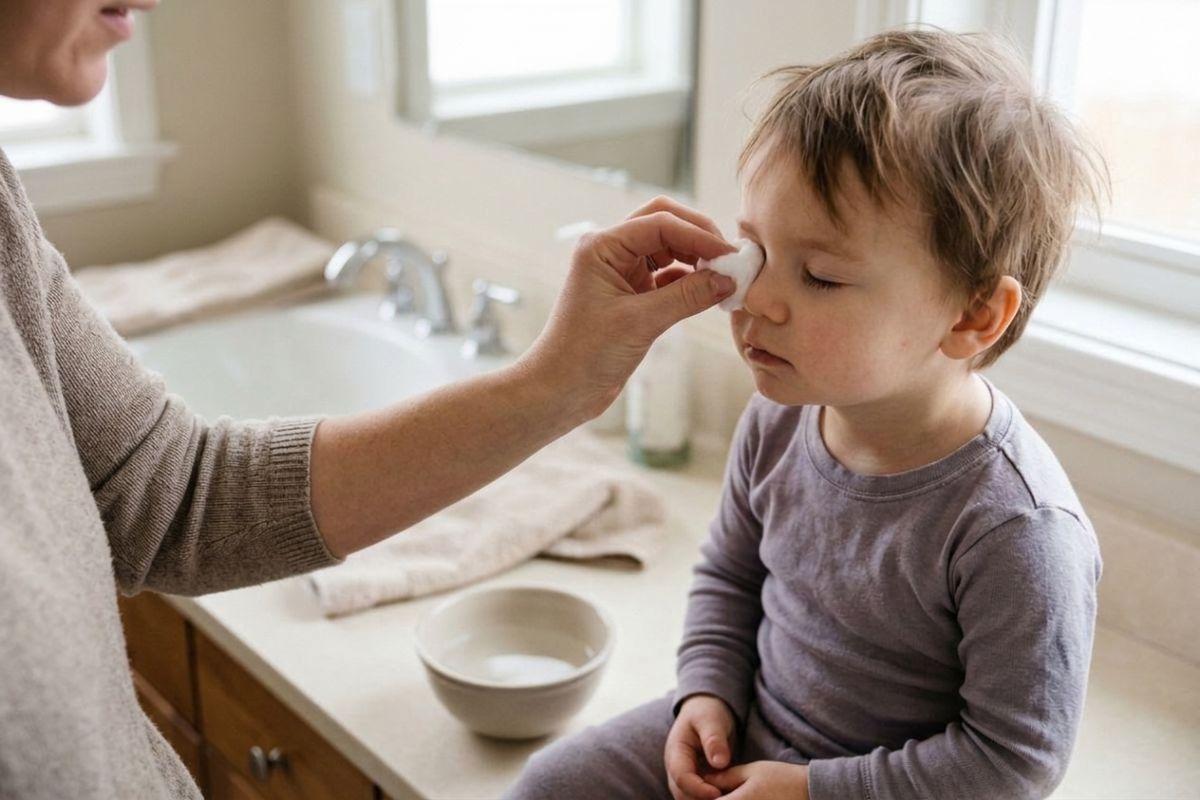
Warm water and clean cotton balls are all you need. Soak a cotton ball, then wipe gently from the inner corner of your eye outward, using a fresh one for each eye. Wash your hands before and after.
Picking at mucus can irritate your eyes and spread germs, so skip the “mucus fishing” videos on TikTok. If you’re managing dry eye at home, pulling mucus out may prompt your eyes to make even more.
If you or your child wears contacts, switch to glasses until an infection clears, then start with a fresh pair of disposable lenses.
How to Prevent Crusty Eyes
As we head into another cold, dry winter, a few small changes can help keep your eyes comfortable:
- Wear sunglasses outside to block wind and debris.
- Drink enough water throughout the day.
- Try a cool-mist humidifier in dry spaces like your bedroom or office.
When to See an Optometrist About Eye Gunk
Most everyday eye gunk clears up with gentle cleaning. Get care right away if you notice any of these:
- Severe eyelid swelling
- Blurry vision
- Eye pain that’s more than mild
- Sensitivity to light
Pus in your eye without any of the urgent signs above is still a good reason to book an appointment soon, and the same goes for pus that persists or worsens after you start antibiotic drops.
Find Out What’s Behind Your Crusty Eyes
When eye gunk turns sticky, sore, or swollen, our optometrists can examine your eyes, find the source, and build a care plan that fits your health and daily habits. Every comprehensive eye exam includes dry eye screening, and same-day and emergency appointments are available.
Book an appointment with Visionary Eye Centre, and our team can help your eyes feel comfortable again.