

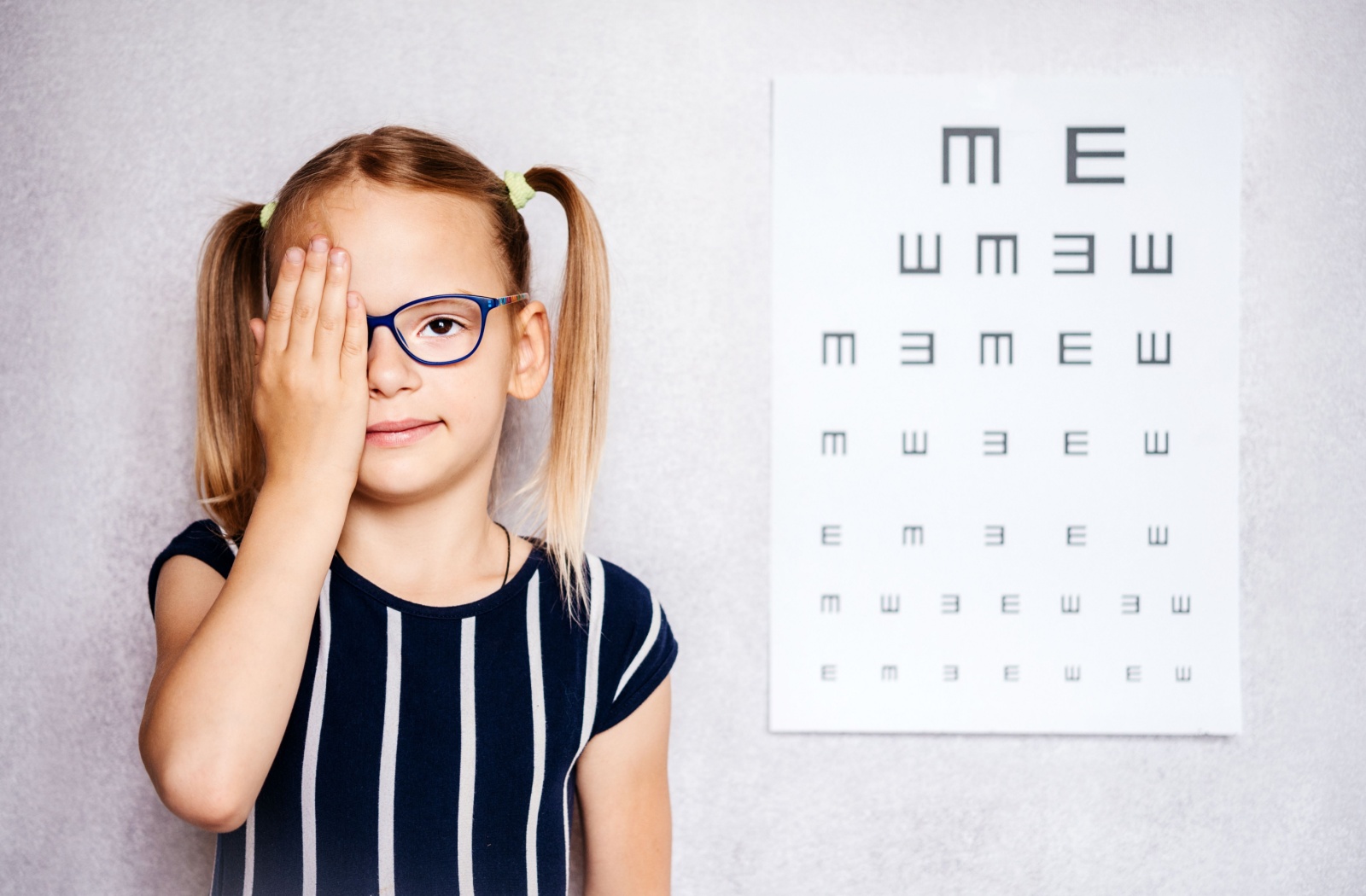
Many children face vision problems. One of these challenges is amblyopia, commonly known as lazy eye, which can impact their visual development from an early age. Children will outgrow their shoes and their clothes, but they typically won’t outgrow lazy eye without proper treatment.
Lazy eye is much easier to treat while children are young, and though it’s never too late to try to treat lazy eye, early intervention is key. Regular eye exams are one of the best ways to stay on top of your child’s visual changes, lazy eye included!
What Causes Lazy Eye?
Amblyopia, or lazy eye, is a condition where the eyes do not work together as they should, leading to reduced vision in the affected eye. The eye itself isn’t truly “lazy”—it simply doesn’t know how to talk to the brain.
The brain should receive visual information from both eyes. These two images are slightly different, giving us our depth perception. Typically, our brains can stitch these images together without a problem.
When 1 eye is weaker than the other, it causes the brain to work harder to create that image. Eventually, our brain decides to disregard the image from the weaker eye. In turn, the eye gets weaker and weaker, potentially leading to permanently reduced vision in that eye. A few factors can contribute to this condition, including:
- Refractive errors: Significant differences in the prescription needs of each eye can cause the brain to favour one eye over the other.
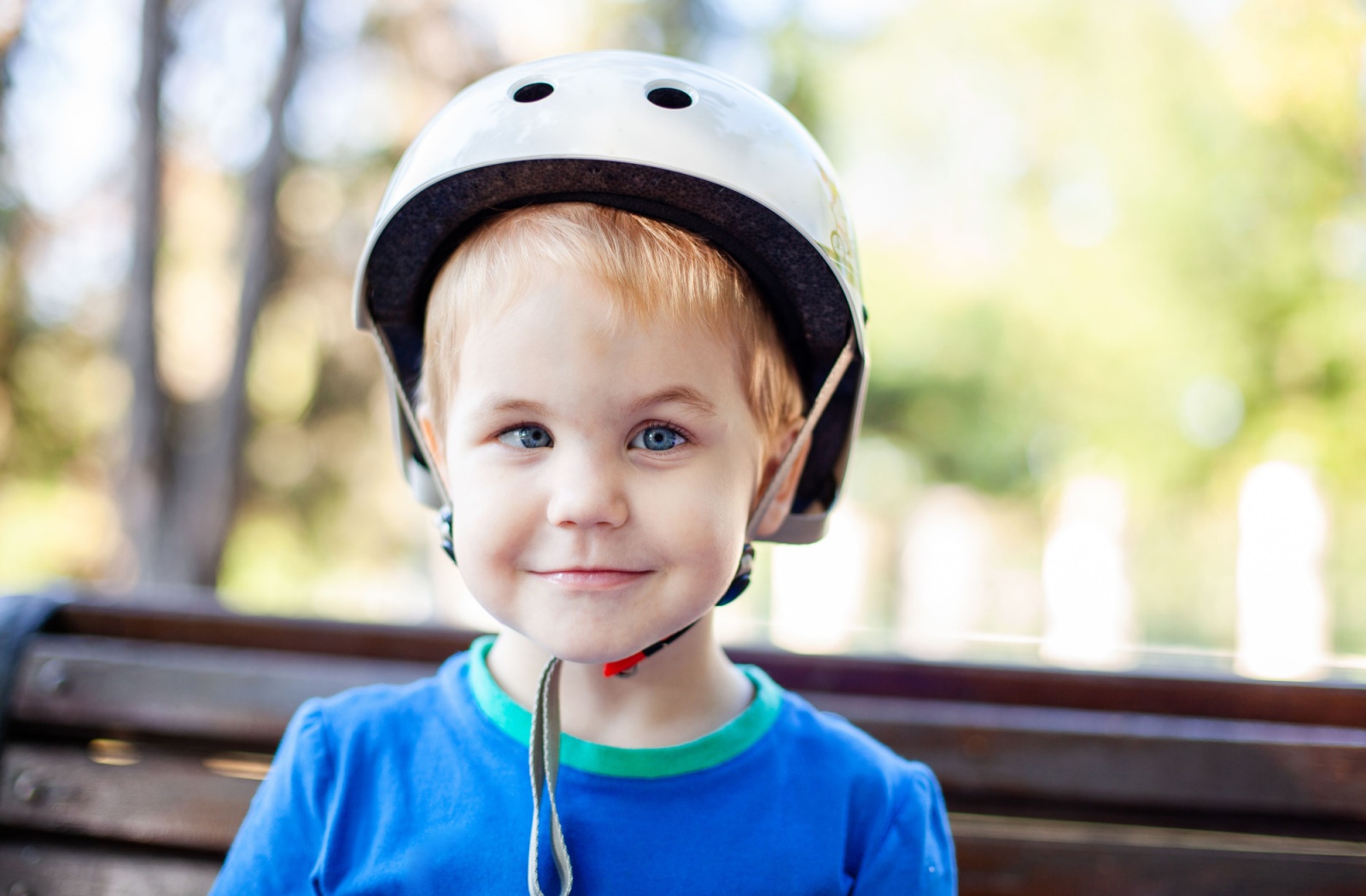
- Eye misalignment (strabismus): When the eyes do not align properly, the brain may ignore input from one eye to avoid double vision.
- Congenital cataracts: In rare cases, a baby can be born with cataracts, which can obstruct vision in one eye and lead to lazy eye.
Lazy Eye Signs & Symptoms
Recognizing lazy eye gives us a jumpstart on treatment. Unfortunately, there often aren’t any visible signs or symptoms. The stronger eye can usually take over, and your child may not realize one eye is weaker. Other times, you may notice more obvious signs, such as:
- Consistent squinting or closing one eye
- Frequent head tilting or turning
- Poor depth perception
- Complaints of headaches or eye strain
Since amblyopia symptoms are so subtle, staying vigilant involves routine eye exams. Your optometrist has the tools necessary to uncover the signs of lazy eye and help safeguard your child’s developing vision.
Diagnosis & Treatment Options for Lazy Eye
A comprehensive eye exam can help diagnose lazy eye. The process assesses visual acuity, checks for refractive errors, and evaluates eye alignment.
Children’s eyes are always growing. The Canadian Association of Optometrists recommends that your child should have an eye exam:
- Once between the ages of 6 & 9 months
- Once between the ages of 2 & 5 years
- Once per year from ages 6 to 19 years
If your optometrist notices amblyopia, they can begin treatment. This often includes resolving any underlying issue, such as:
- Correcting the refractive error: Glasses can help balance eye strength and clear up blurry vision. In some cases, your doctor may recommend patching, where they cover the stronger eye to encourage the weaker eye to work harder, strengthening its connection to the brain.
- Addressing strabismus: Encouraging your child’s turned eye to straighten can take time. Glasses with prisms could help and are part of a program called vision therapy. In severe cases, surgery may be required.
- Removing congenital cataracts: Much like treatment for our older friends, your child’s optometrist can refer them to a surgeon who can remove the cataract from the eye so light can pass through unimpeded.
These are only some of the methods optometrists have at their disposal. Your child’s treatment plan may include a combination of these treatments, tailored to their personal needs.
Is It Ever Too Late for Treatment?
The critical period for treating lazy eye typically occurs from birth to around 8 years of age, when lazy eye will often resolve completely with proper treatment. During this time, the visual system is highly adaptable, thanks to neuroplasticity—the brain’s incredible ability to reorganize itself and form new neural connections. This plasticity allows for more effective treatment of amblyopia in children, as their brains are more responsive to therapy.
Recent research also suggests that, while it’s easier to treat lazy eye in children, treatment in older age groups can also be effective. Studies indicate that adults with amblyopia can still benefit from certain therapies, although the outcomes may not be as pronounced as those achieved during childhood. Additionally, the treatment itself usually takes longer.
Even if the window for optimal treatment has passed, there’s always time to ask for help!
See the Difference We Can Make
Just because you feel like the time to treat lazy eye has passed doesn’t mean you should give up. Quick action is important, but sometimes it is better late than never.
With the right support and guidance, clearer vision is within reach—and Visionary Eye Centre is here to help! Our compassionate team is ready to support you and your child every step of the way. Book an appointment with us today to set your child on the path to healthy vision!