Your Healthy Eyes Are Our Priority
An annual eye exam is one of the most important things you can do to protect your quality of life. The great thing about seeing the eye doctor is that there is so much we can do to prevent future complications.
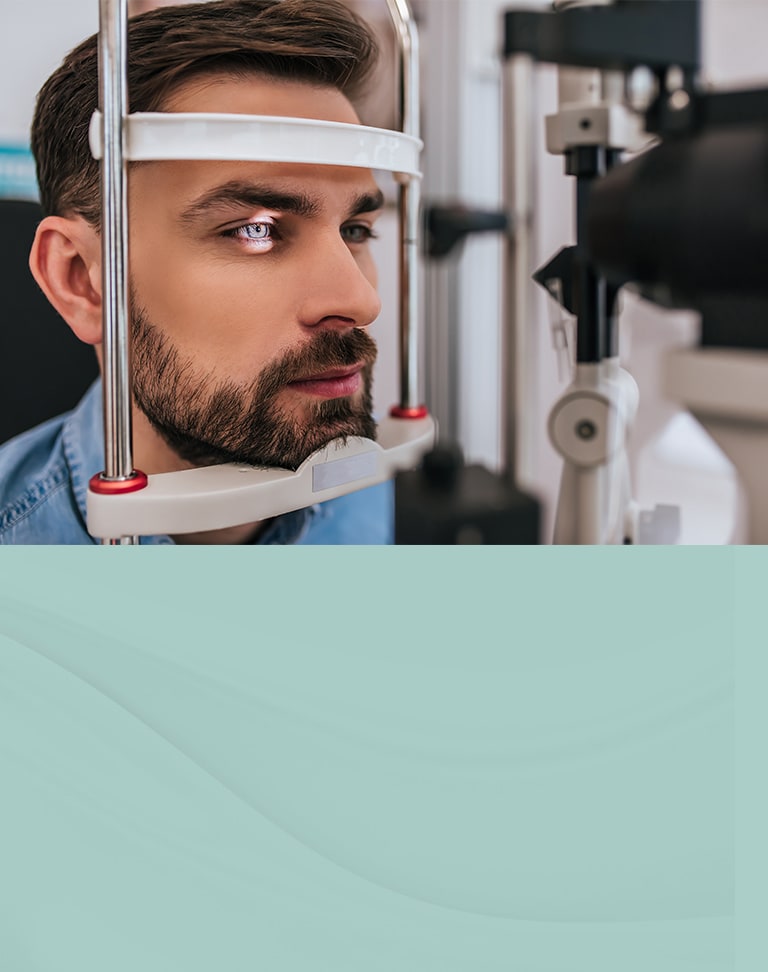
In a digital eye exam with Visionary Eye Centre, we use retinal imaging and other precise diagnostic and testing tools to catch the earliest signs of potential vision issues. We also screen for signs of dry eye disease, a very common and irritating condition that can impact your daily life.
If it’s time to update your glasses, we’ll provide an accurate prescription and give you the opportunity to explore our wide selection of on-trend eyewear and customizable lenses.
Let us preserve your visual wellness in your next eye exam. Book your eye exam with us, or give us a call if you’d like to come by today. We’re often able to welcome same-day appointments.
Request Appointment
The Importance of Retinal Imaging in Your Eye Exam
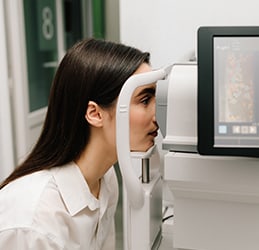

Retinal imaging is a vital part of our comprehensive eye exams, offering a detailed, high-resolution view of the retina, optic nerve, and blood vessels. In our opinion, retinal imaging is so essential that we don’t charge extra for it—it comes standard in our eye exams.
This noninvasive technology helps your optometrist create a wellness baseline for your eye health, making it easier to detect any changes over time. Retinal imaging can aid in the early diagnosis of serious eye conditions like glaucoma, macular degeneration, and diabetic retinopathy, which can all develop without noticeable symptoms.

What to Expect from an Eye Exam at Visionary Eye Centre
Every eye exam includes a variety of tests, each with its own purpose. The ultimate goal of a comprehensive eye exam is to determine how healthy your eyes are, what your prescription is, and if there is any action you need to take.
Children, seniors, people with diabetes, and anyone considering contact lenses also undergo these tests, but may require different tests depending on their unique visual needs.
Retinal imaging is a noninvasive technology that allows your optometrist to see the back of the inside of your eye.
This gives us a high-resolution image of the optic nerve, retina, and tiny blood vessels. This enhanced view also allows us a point of comparison in the future, helping your optometrist pinpoint early warning signs of vision-threatening diseases like glaucoma.
The retinal imaging process is quick and comfortable, typically taking just a few minutes, but it provides critical insights to help protect and preserve your vision.
Retinal imaging is included in our adult eye exams at no additional cost to you.
Most Albertans have dry eye disease, but many people don’t realize they have it and that the symptoms can be managed with specialized care.
Dry eye disease happens when there is a problem with your tears. Often, this is an imbalance in the key ingredients of your tears—oil, water, and mucin.
In your eye exam, we’ll ask a few key questions about the comfort of your eyes. If your answers suggest you might have dry eye disease, we’ll do an extra diagnostic test (at no cost to you) to understand the root cause of your dry eye.
Once we know what’s causing your dry eye symptoms, we can suggest ways to find relief.
Visual acuity tests measure how sharp your vision is and assess both your distance and near vision.
The depth perception test, also called a stereopsis test, is used to determine how well your eyes work together to provide you with depth perception and differentiate between flat and 3D objects.
The cover test helps your eye doctor determine how well your eyes work together as a team. This test helps us see how much your uncovered eye has to move to compensate for the loss of its companion and is used to assess a variety of vision problems.
Eye movement tests, also called ocular motility tests, help your eye doctor determine how well your eyes are able to follow a moving object. This test is useful for detecting problems with eye movements that can affect reading and other important skills.
A retinoscopy allows your eye doctor to begin narrowing down your prescription. This allows them to estimate your prescription and is particularly useful for assessing the vision of children and other patients who are not able to precisely answer their eye doctor’s vision questions.
Refraction allows your eye doctor to further refine your prescription based on the estimates they received during the retinoscopy, determine exactly how farsighted or nearsighted you are, and find out whether or not you have astigmatism.
This test allows your doctor to see the underlying structures in your eye and helps screen for a variety of eye conditions, including cataracts, macular degeneration, corneal ulcers, and diabetic retinopathy.
The glaucoma test, sometimes called the “air puff test” is used to determine the pressure inside your eyes. High intraocular pressure (IOP) may indicate that you’re at risk of developing glaucoma.
Your optometrist may also conduct a visual field test, which allows them to check for blind spots (called scotomas) in your peripheral (side) vision. This is done using a visual field test machine. Blind spots may indicate that you have an eye disease such as glaucoma.

Preparing for Your Eye Exam
Unlike the exams you took in school, you don’t need to study for your eye exam. However, there are a few things you will want to do before you arrive for your appointment, including:
- Please bring a list of any medications, including eye drops, that you are currently taking.
- You should also bring your Alberta Health Care card and your private insurance card if you have one.
- Bring your glasses or contacts (or both) if you wear them.
- You likely won’t have a dilated eye exam unless you have diabetes or glaucoma. If we have told you to expect a dilated eye exam, please bring sunglasses to protect your light-sensitive eyes and plan for someone to give you a ride home.
Alberta Health Care covers some eye exams for children and youth under 18, and adults over 65, and covers many medically necessary visits. For appointments not covered by Alberta Health Care, we can direct bill your insurance provider.
We can’t wait to see you! Book your next eye exam today. We’re happy to accept same-day appointment requests whenever we can.
Request AppointmentOur Services




What Our Patients Are Saying
Read more than 400 glowing reviews of Visionary Eye Centre to learn what patients like you are saying about our team’s attentiveness, genuine care, and level of service.
Sherwood Park Location
Millwoods Location
See What’s Trending


Find an Eye Clinic Near You
Sherwood Park Location
You’ll find us at Synergy Wellness Centre, just off Bethel Drive, north of Baseline Road. Parking is $2, but simply provide your plate number at your appointment, and we’ll be happy to cover the parking cost for the duration of your visit.
Our Address
Synergy Wellness Centre
- Unit 101, 501 Bethel Drive
- Sherwood Park, AB T8H 0N2
Contact Information
- Phone: 780 467-6688
- Fax: 780 467-6682
- Email: info@visionaryeyecentre.com
Hours of Operation
Millwoods Location
You’ll find us inside Lakewood Community Health Centre, just off 29 Avenue and west of 50 Street NW. Paid parking is available on-site, but our front desk can provide you with a 2h free parking code. This location is easily accessible by public transit.
Our Address
Lakewood Community Health Centre
- Unit 108, 7319 29 Avenue
- Edmonton, AB T6K 2P1
Contact Information
- Phone: 780 960-1616
- Fax: 780 900-8380
- Email: millwoods@visionaryeyecentre.com
Hours of Operation
* Saturday hours may vary, please call first
Request AppointmentCheck Out Our Clinic